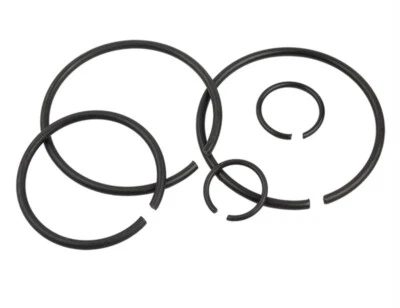
Retaining Rings & Clips
External, internal, E-clips, spiral and push-on retainers.
Also searched as: snap ringscirclipse-clipsexternal retaining ringc-clips
-
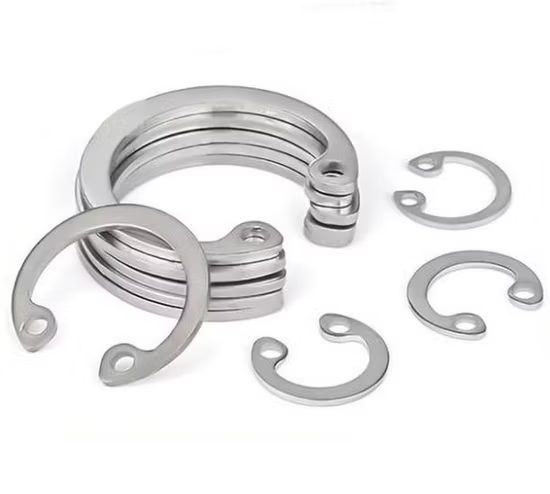
90mm C Type Internal Circlips Snap Lock C-Clips
Size: 90mmType: Internal
-
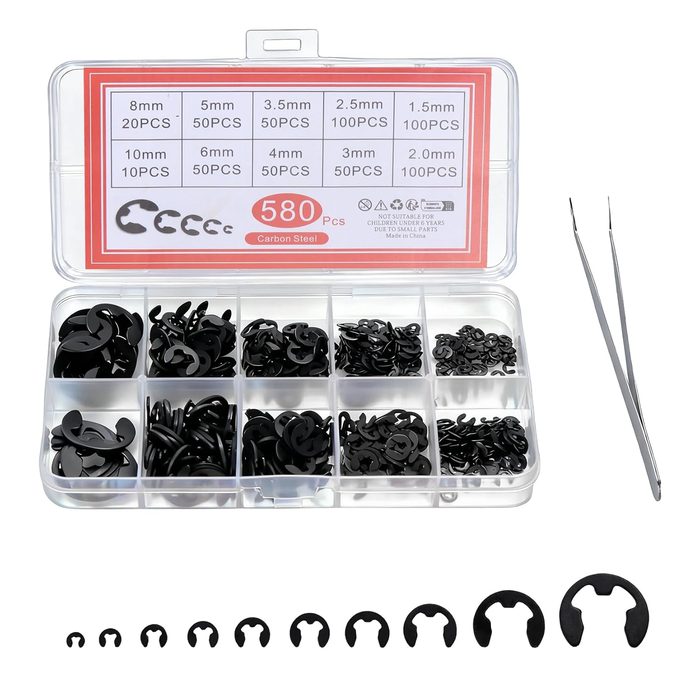
C Clips 1.5-10mm Internal Snap Rings Assorted Sizes
Size Range: 1.5mm-10mmType: Internal
-
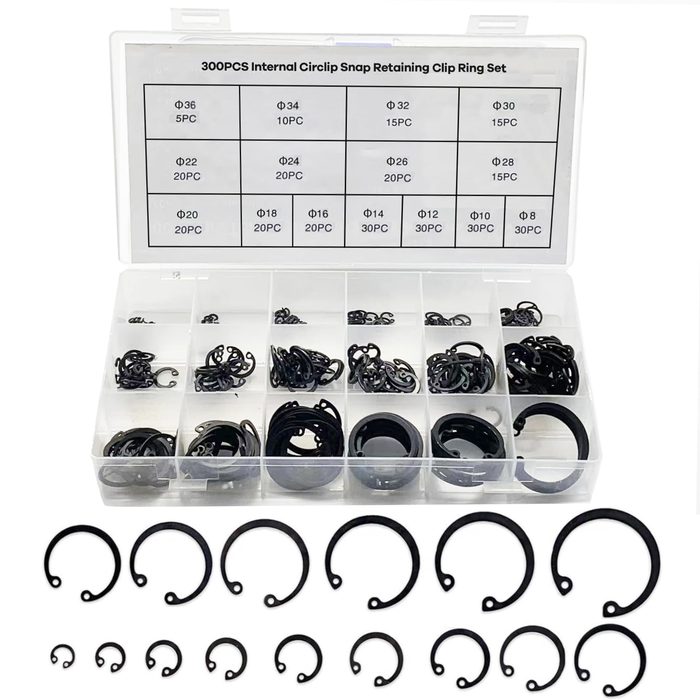
C Clips Snap Retaining Ring For Hole Internal Retaining Ring Shaft Circlip
Size: M8~M50Type: Internal
-
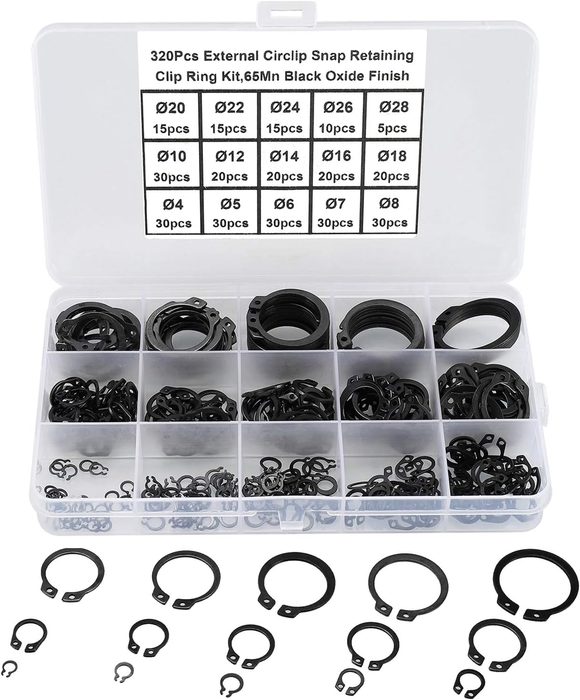
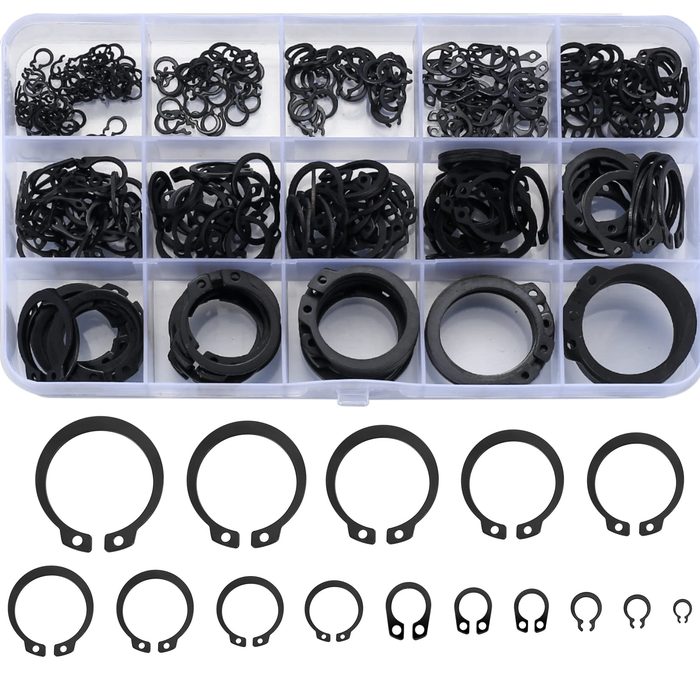
C-Clips External Fixing Ring Kit 15Sizes
Sizes: 15Type: External
-
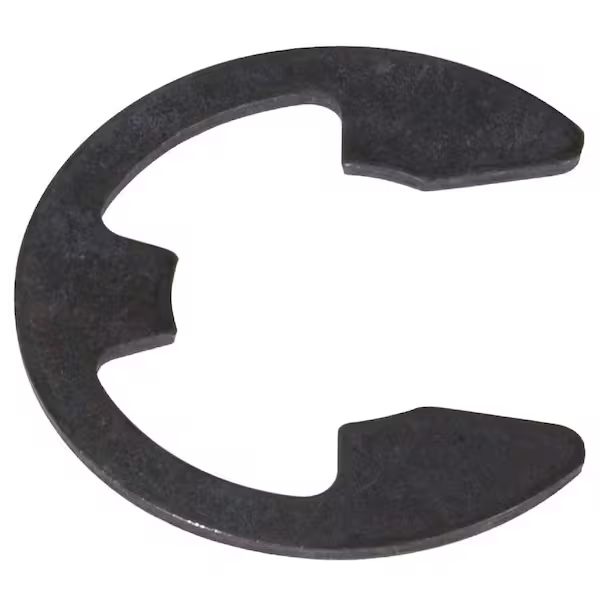
-
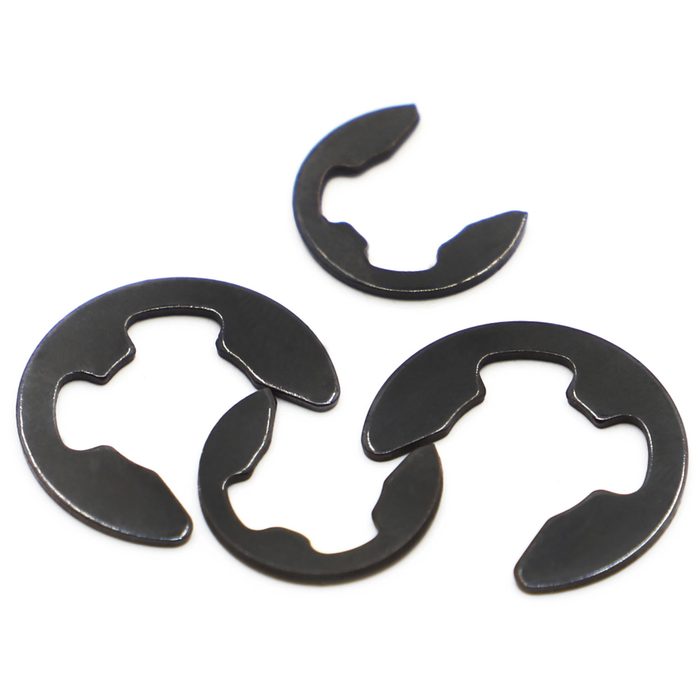
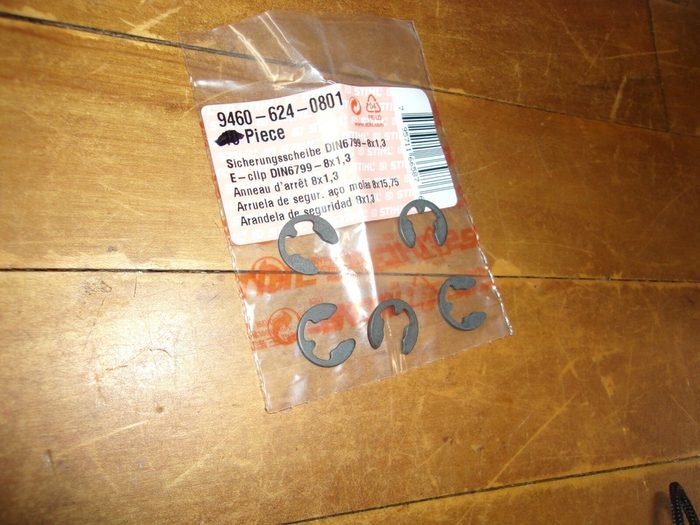
E-Clip (GB896)
Size Range: M1.5- M15Thickness: 0.3-3mm
-
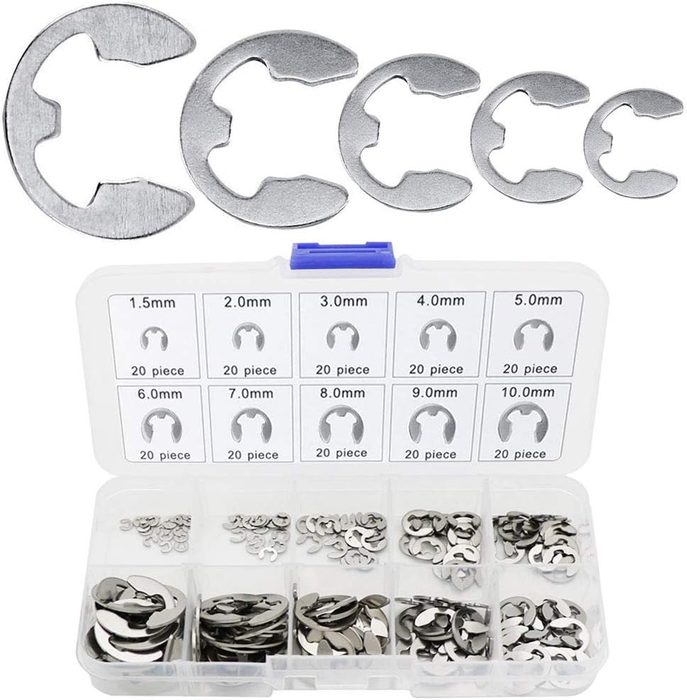
-
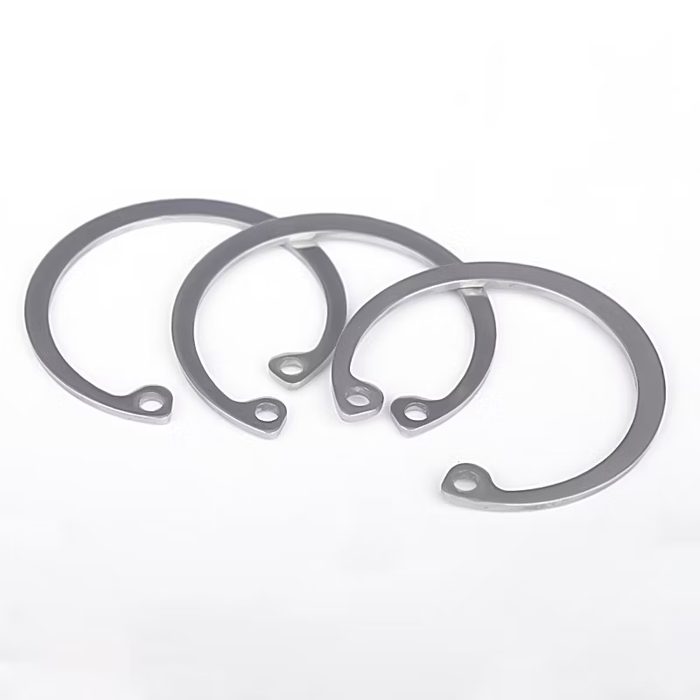
Internal Snap Ring C Type
Inner Diameter: 8-72 mm
-
-
-
About retaining rings & clips
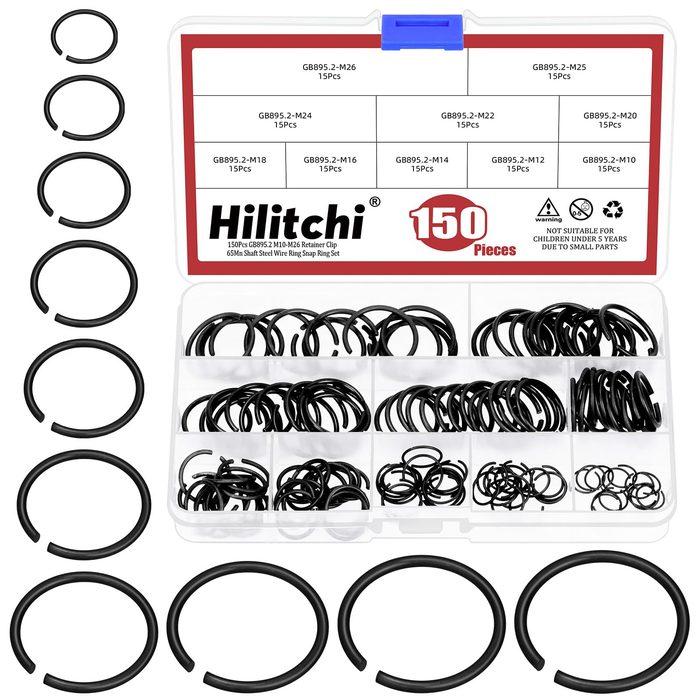
Retaining rings and clips are critical components for securing assemblies on shafts or within bores, preventing axial movement. They are broadly categorized by their mounting orientation: internal retaining rings fit into grooves within bores, and external retaining rings fit into grooves on shafts. Common types include stamped circlips (often conforming to DIN 471 for external and DIN 472 for internal applications), spiral retaining rings (multi-turn, groove-less designs for lighter loads), E-clips (E-shaped, radially installed for smaller shafts), and push-on retainers (friction-fit, groove-less, for low-load, non-precision applications). Selection criteria typically involve the shaft or bore diameter, the groove dimensions (diameter, width, depth), and the thrust load the ring must withstand. Material considerations include carbon spring steel (standard for general industrial use), stainless steel (for corrosion resistance, often 302 or 316), and beryllium copper (for non-magnetic or high-conductivity applications). Finishes such as phosphate and oil, zinc plating, or black oxide provide enhanced corrosion protection. Standardized series like ANSI, DIN, and JIS define dimensional characteristics and performance ratings for various ring types.
How to choose
Selecting the correct retaining ring begins with identifying the application type: internal (bore) or external (shaft). Next, determine the critical dimensions: the shaft or bore diameter, and if grooved, the groove diameter and width. This narrows down the primary ring type (e.g., internal circlip, external circlip, E-clip). The third step is to calculate the maximum thrust load the ring must withstand, as this dictates the required shear strength and groove deformation resistance, influencing material and cross-section. Finally, consider the environmental conditions, such as exposure to corrosives or extreme temperatures, to specify the appropriate material (e.g., carbon steel, stainless steel) and finish (e.g., zinc plating, black oxide) for durability and performance.