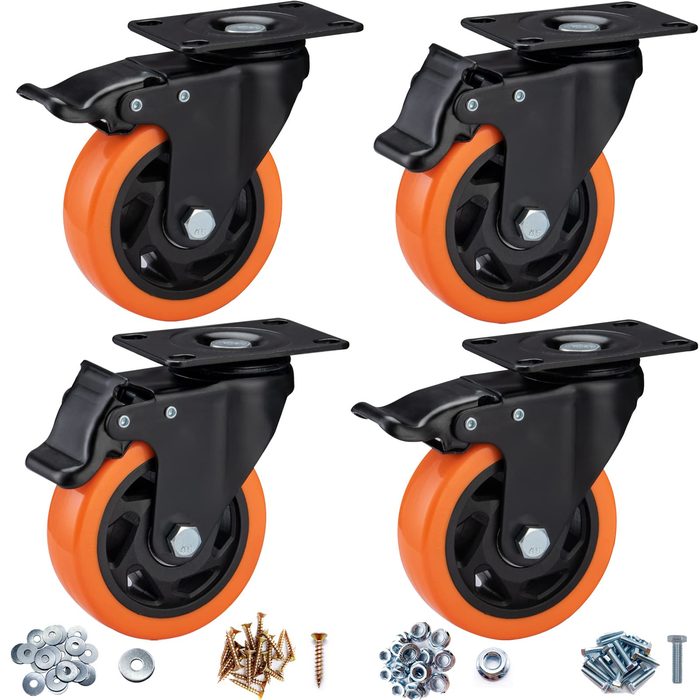
Casters & Wheels
Swivel, rigid, locking and leveling casters by load rating.
Also searched as: swivel castersindustrial wheelslocking castersheavy duty casters
-
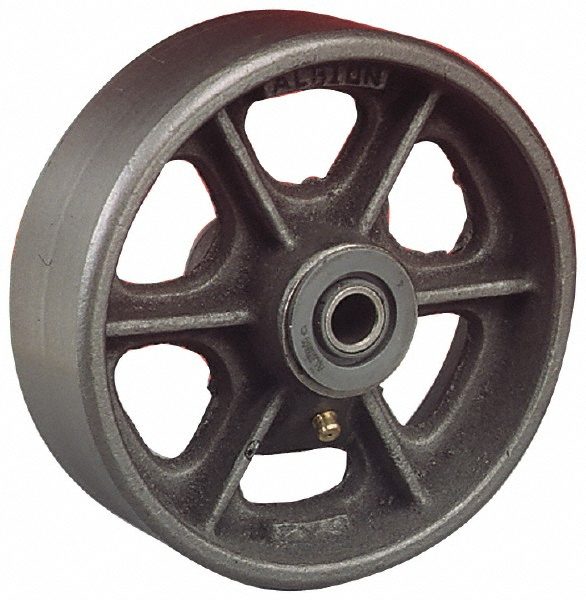
Caster Wheel: Cast Iron, 9" Dia, 3" Wide, 1" Axle
Axle Diameter: 1 inchBearing Type: Straight RollerWheel Diameter: 9 inchWheel Width: 3 inch
-
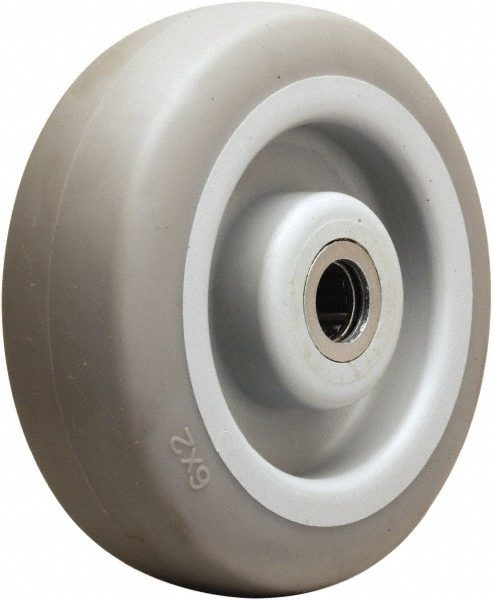
Caster Wheel: Rubber on Thermoplastic, 6" Dia, 2" Wide, 5/8" Axle
Axle Diameter: 5/8 inchBearing Type: Straight RollerWheel Diameter: 6 inchWheel Width: 2 inch
-
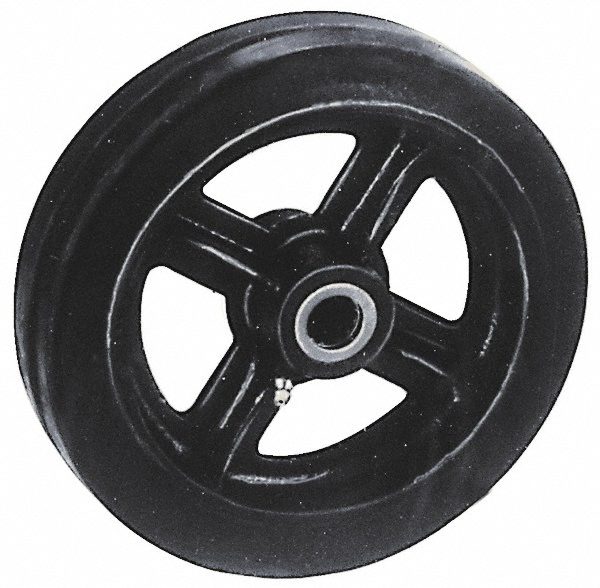
Caster Wheel: Rubber, 12" Dia, 2-1/2" Wide, 1" Axle
Axle Diameter: 1 inchBearing Type: RollerWheel Diameter: 12 inchWheel Width: 2.5 inch
-
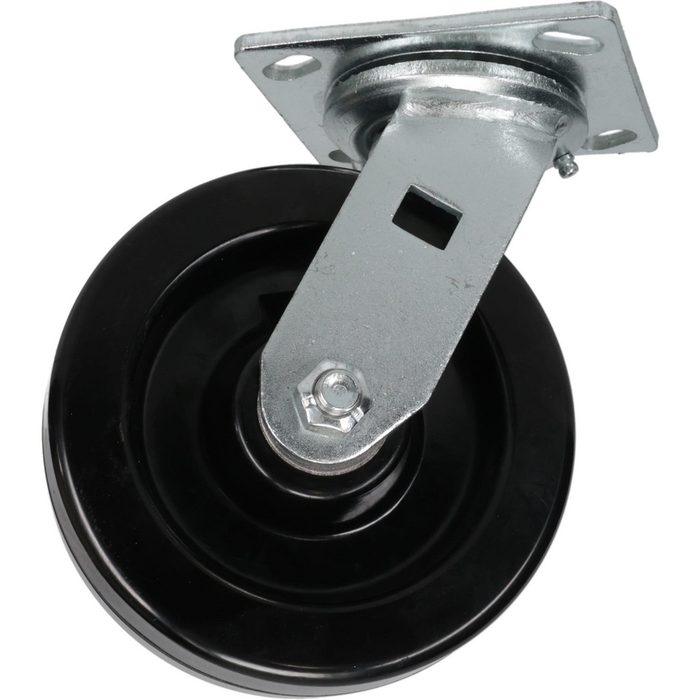
Swivel Top Plate Caster
Capacity: 1000 lbOverall Height: 6.5 inchWheel Diameter: 5 inchWheel Width: 2 inch
-
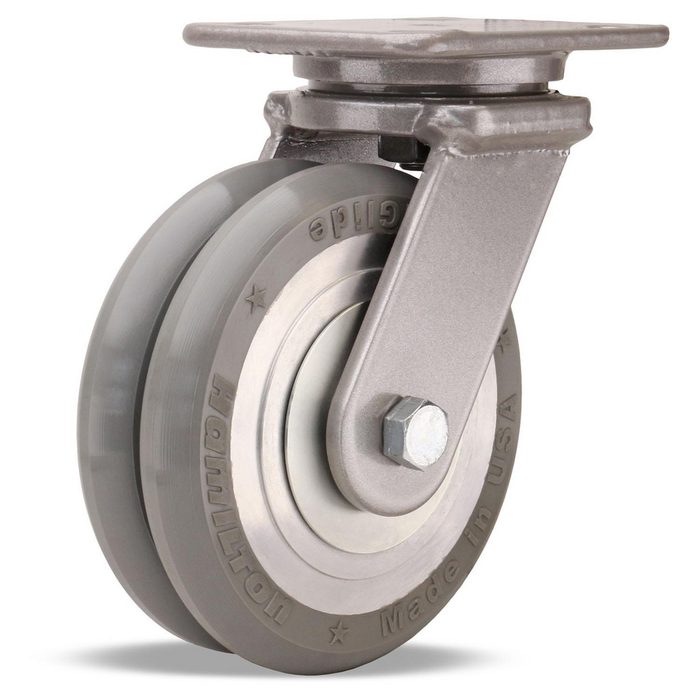
Swivel Top Plate Caster: Polyurethane on Aluminum, 4" Wheel Dia, 2" Wheel Width, 900 lb Capacity
Load Capacity: 900 lbsWheel Diameter: 4 inchWheel Width: 2 inch
-
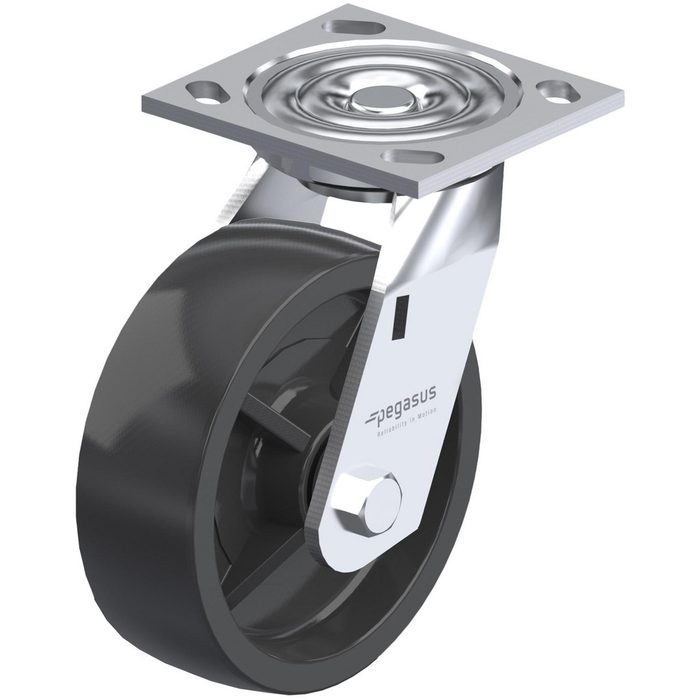
Top Plate Casters
Load Capacity: 1000 lbsWheel Diameter: 6 inchWheel Width: 2 inch
About casters & wheels
Casters and wheels provide mobility for equipment, carts, and machinery. Casters integrate a wheel into a mounting assembly, allowing for directional movement. The primary types include swivel casters, which permit 360-degree rotation of the wheel relative to the mounting plate, and rigid casters, which maintain a fixed orientation. Locking casters incorporate a brake mechanism to prevent wheel rotation or swivel action, while leveling casters combine mobility with a stable, adjustable base for stationary positioning. Selection is primarily driven by load rating, expressed in pounds or kilograms, which dictates the required wheel diameter, tread width, and bearing type. Common wheel materials include polyurethane, rubber, nylon, and cast iron, each offering different characteristics for floor protection, noise reduction, and load capacity. Tread types range from flat to crowned. Mounting options typically include top plate, stem (threaded or unthreaded), and kingpinless designs. Bearing types, such as roller bearings, ball bearings, and plain bores, affect rolling resistance and load distribution. Finishes often involve zinc plating for corrosion resistance or powder coating for durability.
How to choose
Selecting the appropriate caster or wheel begins with determining the required load capacity per caster, considering the total load and the number of casters. Next, evaluate the operating environment: floor type (concrete, tile, carpet) dictates wheel material and tread hardness for optimal performance and floor protection. Consider if maneuverability is paramount, necessitating swivel casters, or if straight-line tracking is preferred, indicating rigid casters. The need for stationary positioning requires locking or leveling casters. Finally, assess the mounting method – top plate dimensions, stem diameter, and thread specifications must match the equipment interface. Trade-offs involve load capacity versus floor protection, maneuverability versus stability, and initial cost versus long-term durability.